
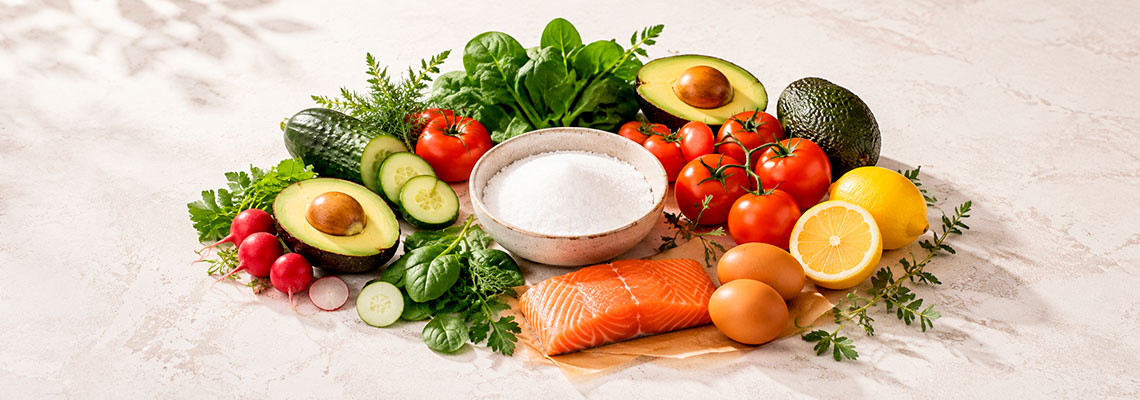
What is iodized salt? It’s simply table salt with a small, controlled amount of iodine added to it. It’s one of the most successful public health interventions of the 20th century, and it’s also one of the least talked about — most people use it every day without knowing what it does or why it’s there. Here’s the story behind it, and how it compares to the unrefined sea salt our members produce.
A note before we start: this article is general, public-interest information, not medical advice. Iodine needs vary by person and by country — if you have questions about your own intake, speak to a doctor or dietitian.
What is iodized salt, and where did it come from?
Iodine was discovered in 1811 by the French chemist Bernard Courtois, who found it while extracting compounds from seaweed ash. It took until the 1820s for another chemist, Jean-François Coindet, to link small doses of iodine to shrinking goitres — the visible swelling of the thyroid gland caused by iodine deficiency. Goitre was once common in inland regions far from the sea, where soil and food naturally contain very little iodine.
Switzerland was one of the first countries to iodize salt nationally, in the early 1920s, and the United States followed in 1924. Within a generation, goitre rates in those regions fell sharply. Today, salt iodization is mandatory in over 120 countries, and the share of households worldwide using iodized salt has risen from roughly a quarter in 1990 to about two-thirds today — though iodine deficiency remains a documented public health issue across parts of Europe.
How iodine is added
Salt is most commonly iodized with potassium iodate (KIO₃), sprayed or mixed onto the salt in carefully controlled amounts. It’s the preferred compound worldwide because it holds up well against heat, humidity and light — unlike potassium iodide, which oxidises more easily and needs extra stabilisers to stay effective in storage. The process doesn’t change the taste, smell or appearance of the salt. The World Health Organization’s guideline originally set a reference point of 20mg of iodine per kilogram of salt, though in practice each country sets its own minimum and maximum levels based on how much salt people there actually eat.
Iodized salt vs. sea salt
Sea salt does contain some iodine naturally, since it comes from seawater — but the amount is small and varies a lot depending on where and how it’s produced, so it can’t be relied on to meet daily iodine needs on its own. Iodized salt exists precisely to close that gap with a consistent, controlled dose.
It’s worth knowing that, unlike some countries, salt iodization isn’t mandatory across the EU — it’s largely left to individual member states, and coverage varies as a result. Even countries with strong public health systems, including Germany, Finland and Norway, still show pockets of iodine insufficiency in parts of the population, according to a review published in the European Journal of Endocrinology.
Who typically needs it
Some groups are more dependent on getting enough iodine from their diet: pregnant and breastfeeding women, since iodine is essential for a baby’s brain development; people living far from the coast, where soil and local produce tend to be naturally low in iodine; and anyone who eats little dairy, seafood or eggs, the main dietary sources of iodine besides fortified salt.
Reading the label
Not all salt is iodized, and that’s by design — it’s mainly added to everyday table salt, not to specialty or unrefined salts. If a product is iodized, it will usually say so on the label, or list potassium iodate (or iodide) in the ingredients. Sea salt, flor de sal and other unrefined salts are generally not iodized, since they’re chosen for their mineral content and texture rather than as a fortification vehicle — so if that’s what’s mostly on your table, it’s worth knowing where your iodine is coming from instead.
Explore more
Curious about the sea salt our members produce? Visit our Members directory to see individual profiles.