
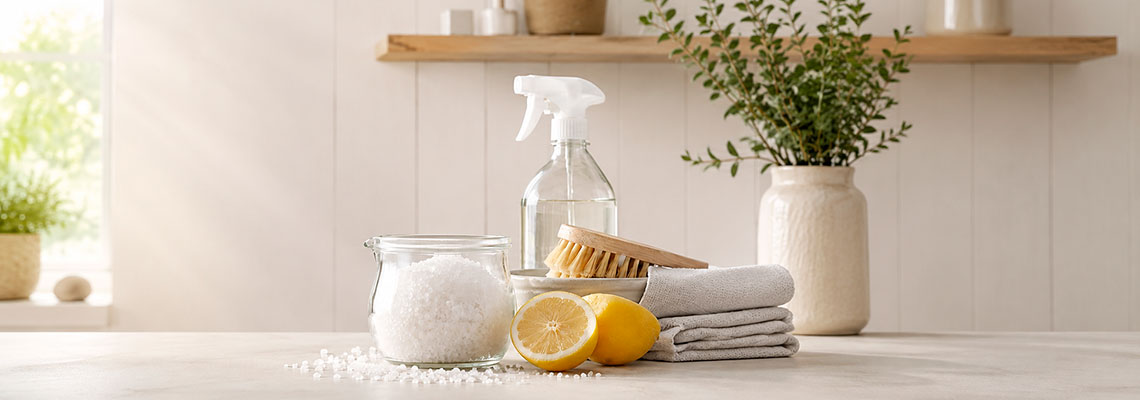
Cleaning with sea salt is an old household habit that’s easy to forget in a world of specialised sprays and single-use wipes — but it still works, and it works well. Sea salt is naturally absorbent, mildly abrasive and completely free of the additives found in many commercial cleaners. Here’s how to actually put it to use around the house.
Why Sea Salt Works: A Natural Moisture Absorber
Salt is hygroscopic, meaning its ions naturally attract and hold on to water molecules from the air around it. That’s the same property that makes salt useful in the kitchen for keeping other ingredients dry — and it translates well to a damp cupboard, a musty shoe closet, or a car that never quite airs out. A small open bowl or breathable bag of coarse sea salt left in one of these spaces will gradually pull moisture out of the air, helping reduce the mustiness that comes with it.
It’s worth being realistic about what this can and can’t do: sea salt works best in already-humid, enclosed spaces, not as a replacement for a dehumidifier in an entire room. Think of it as a low-effort helper for problem corners, not a full solution to a damp home.
Sea Salt for Stain Removal
Spilled red wine on a tablecloth or rug? Don’t reach for water first — blot up the excess, then cover the stain generously with sea salt while it’s still wet. The salt draws the liquid out of the fibres before it has a chance to set, and once it dries you can simply vacuum or brush it away. The same trick works on fresh grease spots on fabric. For everyday marks like tea and coffee rings inside mugs, a damp sponge dipped in sea salt and rubbed in small circles lifts the discolouration without scratching the glaze.
Sea Salt as a Natural Abrasive Cleaner
Coarse sea salt’s larger, irregular crystals make it an effective, gentle abrasive — sturdy enough to lift stuck-on grime, but not so harsh that it scratches most surfaces. Sprinkle it onto a cast iron pan with a little water or oil and scrub with a cloth to shift baked-on food without stripping the pan’s seasoning. On a wooden cutting board, rubbing in sea salt (with half a lemon, if you have one) lifts stains and odours while being gentle enough for the wood. It also works well on tarnished copper and brass — combined with a little vinegar and rubbed in, it helps restore some of the shine.
More Ideas for Cleaning With Sea Salt: Jewellery and Glassware
Tarnished silver jewellery can be brought back to life without any scrubbing. Line a bowl with aluminium foil (shiny side up), add near-boiling water with a tablespoon of salt and a tablespoon of baking soda, then drop in the silver so it touches the foil. Within a few minutes, an electrochemical reaction pulls the tarnish off the silver and onto the foil, leaving the piece bright again — just rinse and dry it afterwards.
Cloudy, white marks on glassware are usually hard water residue, and salt makes a gentle, effective scrub for it. Mix equal parts salt and baking soda with a few drops of water into a thick paste, spray the glass first with a water-and-vinegar solution to loosen the mineral deposits, then work the paste in with a soft cloth. Rinse well and the cloudiness should lift, leaving the glass clear again.
Explore more
Curious about the sea salt behind these everyday uses — and where it actually comes from? Visit our Members directory to see the producers behind it.